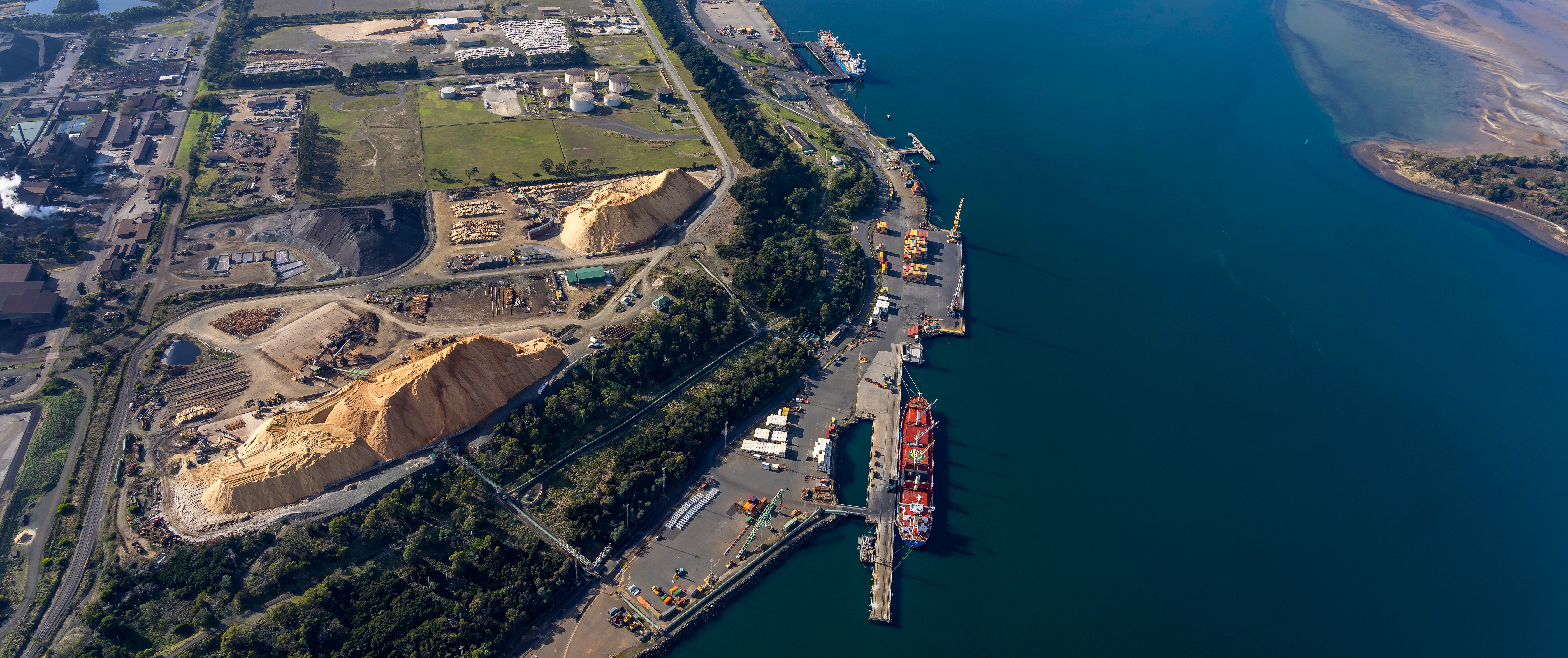
Feasibility assessment of transhipment from an existing port.
The trend of shipping freight costs in recent years has encouraged the resource sector to adopt larger vessels where possible for economical export of commodities. Adopting larger ships requires appropriate port facilities for safe operation.
However, many existing harbors around the world originally were designed to accommodate smaller vessels. The upgrade of these ports to accommodate larger vessels in many cases requires capital dredging to expand the channel, turning basin, and berth areas. The environmental approval process and supporting studies for a capital dredging campaign requires substantial time. The high capital expenditure (CAPEX) and time required for the approvals and construction of a port upgrade project can be prohibitive for proponents seeking to benefit from reduced export unit rates or a short-term increase in commodity rates.
Transhipment from an existing port is one solution that can potentially shorten the start-up time to increase port export capacity for a lower CAPEX.
This paper outlines the process and key considerations for a reliable feasibility assessment based on a recent project experience.
Senior Principal Consultant
Linden is a Senior Principal Coastal and Maritime Engineer based in Perth with over 20 years of experience in feasibility, planning and design of ports and maritime facilities.
His experience in design of recreational boating facilities includes development and evaluation of designs and costs for pontoons, boat ramp and jetties, siting studies for new facilities, and investigating the impact of marine traffic wake on moored recreational vessels.
Consultant
Samantha is a Civil Engineer who is studying a Masters in Coastal and Offshore Engineering part time. She has 3 years experienced in dredging, beach design, coastal processes, and project management.
She has project managed several dredging projects for the Department of Transport and is currently working on a range of technical, coastal, and dredging projects. Samantha's experience has provided her with a strong foundation in the principles of coastal engineering, including hydrodynamics, sediment transport, and shoreline dynamics.

Senior Consultant
Jarryd is a Senior Consultant at BMT, specializing in coastal engineering. He obtained his B.Eng in Civil Engineering and M.Eng in Port and Coastal Engineering from Stellenbosch University, South Africa.
Before joining BMT, Jarryd worked for the Council for Scientific and Industrial Research (CSIR) in South Africa. He enjoys all aspects of coastal engineering and is passionate about applying his expertise to address complex coastal challenges.

Ian McRobbie
Programme Manager - Ports & Marine Infrastructure
Ian is responsible for BMT’s maritime infrastructure portfolio for the APAC region; the portfolio ranges from traditional maritime facilities design, dredging, and coastal studies to overseeing studies for offshore wind farm developers.
Ian’s core role is to leverage BMT’s significant deep domain knowledge in the maritime sector for existing and new customers in Australia and Asia, particularly in the carbon reduction and energy transition strategies for their current and future assets.

Brad Saunders has over 35 years experience as a civil engineer and over 30 years as a coastal and maritime engineering specialist with experience in the Engineering Consulting industry to the Oil & Gas, Minerals & Energy, Ports & Harbour and Coastal Facilities sectors including recreational boating facilities.
He currently holds the position of Technical Lead APAC - Coastal and Maritime Engineering as part of a large team of specialist Coastal and Maritime Engineers in the region, and is BMT's Project Director with technical and corporate oversight of the coastal and ocean engineering design of a number of projects in the region.